Bubble & Dust Defects in EMI Shielding Windows
01 — What is the problem?
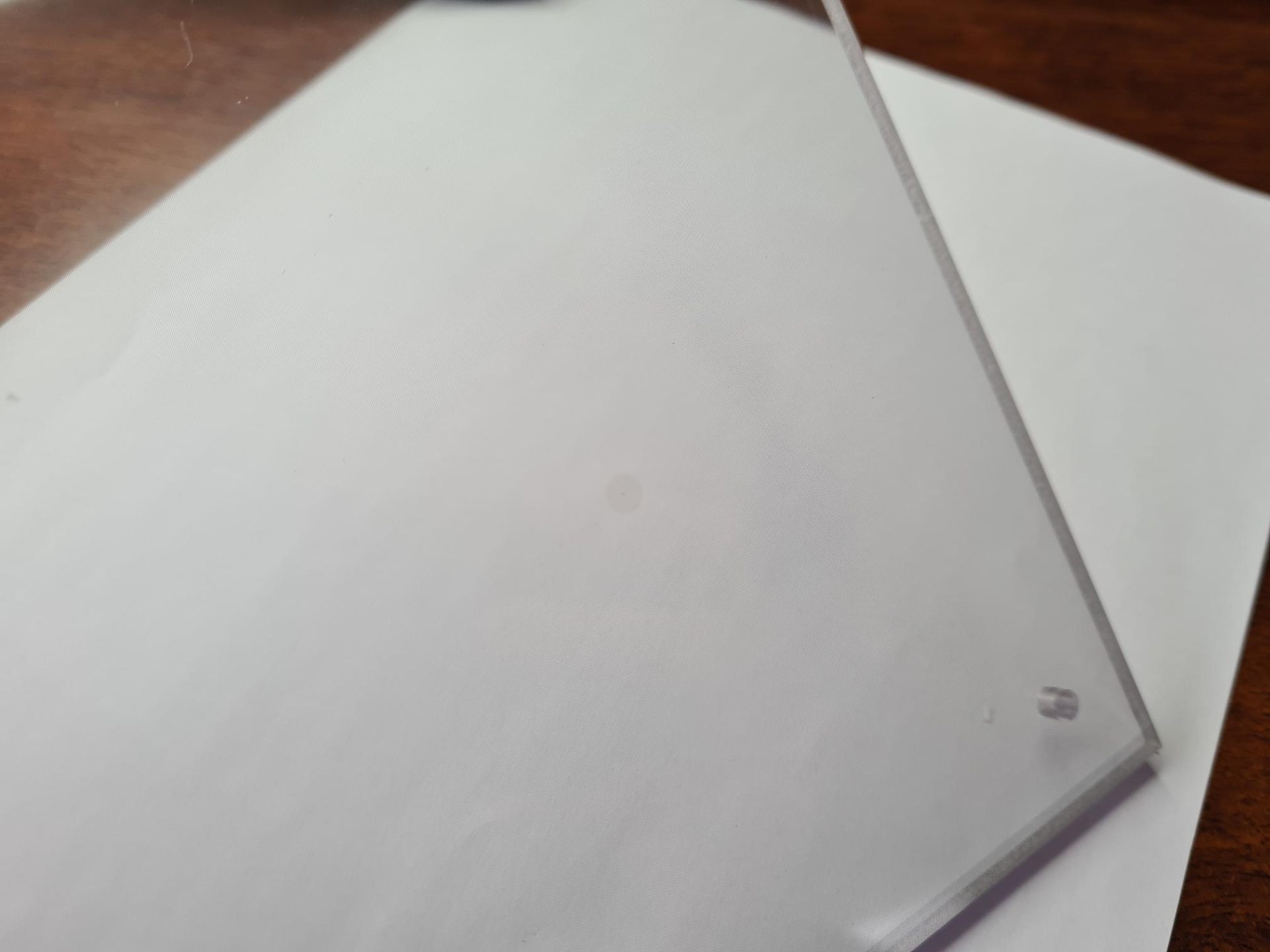
When laminating transparent EMI shielding films onto glass or polycarbonate, dust particles and micro-contaminants can become trapped between layers, creating visible bubbles and optical imperfections. These defects directly impact the visual quality of the final product and the end-user experience.
02 — Why does it happen?
- Dust particles settle on film or substrate surfaces during handling outside of controlled environments.
- Micro-contaminants from packaging, tooling, or operator handling get trapped between lamination layers.
- Insufficient air extraction during the lamination process leaves air pockets between layers.
- Static charge on plastic substrates attracts airborne particles before lamination.
- Non-clean-room environments expose surfaces to ambient dust during critical process steps.
03 — Consequences
- Reduced optical clarity — bubbles and particles scatter light and create visible spots.
- Visible imperfections that are unacceptable for display windows, control panels, and customer-facing equipment.
- Affected long-term durability — trapped contaminants can cause delamination over time.
- Heavily impacted overall aspect of the equipment and degraded customer experience.
- Increased reject rates and production costs due to failed quality inspections.
04 — Common mistakes
- ✗Performing lamination in a standard workshop environment instead of a clean room.
- ✗Assuming that careful manual cleaning is sufficient to prevent contamination.
- ✗Skipping incoming material inspection for dust and surface defects before lamination.
- ✗Not controlling static charge on plastic substrates prior to film application.
- ✗Treating clean room lamination as a luxury rather than a process necessity.
05 — Possible solutions
- ✓Always perform EMI film lamination in a certified clean room environment to minimize particle contamination.
- ✓Implement anti-static measures (ionizers, grounding) when handling plastic substrates.
- ✓Use automated lamination equipment with integrated air extraction to prevent trapped air pockets.
- ✓Inspect all incoming materials (films, glass, polycarbonate) for surface defects before processing.
- ✓Apply 100% visual quality control on every delivered part to catch any remaining defects.
- ✓Specify optical quality requirements (acceptable defect size and density) clearly in procurement specifications.
06 — Related topics
Need help on a specific case? Reach out directly: