EMI Shielding Film Comparison
01 — What is the problem?
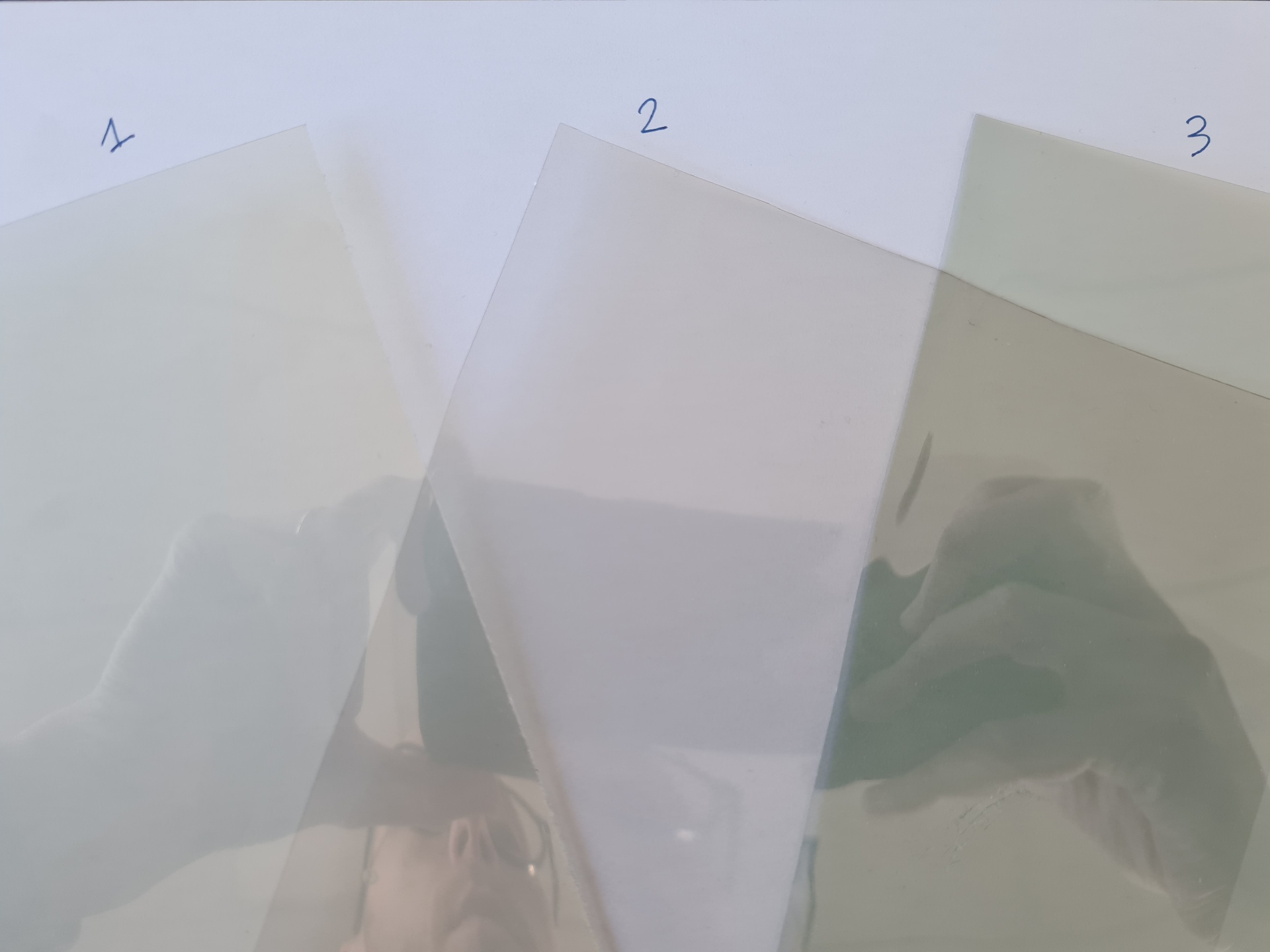
Not all transparent EMI shielding films behave the same. When selecting a shielding solution, the choice is often reduced to transparency or EMI shielding level alone. In reality, performance depends heavily on the conductive technology used. There is no 'one-size-fits-all' solution — the right choice always depends on the application environment and performance targets.
02 — Why does it happen?
- ITO (Indium Tin Oxide) films offer high transparency but limited surface conductivity, resulting in lower shielding at higher frequencies.
- Metallized films use a similar thin-film approach but with higher shielding levels, at the cost of reduced transparency.
- Metallic mesh films (copper, silver) provide the highest conductivity and EMI shielding effectiveness, but with lower optical transmission.
- Each technology has a different frequency response profile — performance varies across the spectrum.
- Environmental factors (humidity, temperature, UV) affect each film type differently over time.
03 — Consequences
- Choosing the wrong film technology leads to either insufficient shielding or unacceptable optical quality.
- Over-specifying shielding with a dense mesh film when ITO would suffice increases cost and reduces transparency.
- Under-specifying with ITO when high attenuation is needed results in EMC compliance failures.
- Unexpected performance gaps at specific frequency ranges if the film technology is not matched to the threat.
- Integration and durability issues when film properties are not aligned with the operating environment.
04 — Common mistakes
- ✗Comparing films solely on dB values without considering the frequency range of interest.
- ✗Assuming all transparent shielding films have similar optical properties.
- ✗Selecting film technology based on cost alone without validating performance requirements.
- ✗Ignoring surface resistance (Ω/sq) as a key differentiator between film technologies.
- ✗Not requesting samples of different film types for side-by-side optical and EMC evaluation.
05 — Possible solutions
- ✓Define the required shielding level and frequency range before selecting a film technology.
- ✓Compare ITO, metallized, and metallic mesh films on: transparency (%), shielding (dB), surface resistance (Ω/sq), and durability.
- ✓Request samples from suppliers to evaluate optical quality in the actual application context.
- ✓Consider hybrid approaches: different film types for different zones of the same equipment.
- ✓Validate performance with measurements on the complete assembly, not just the raw film.
- ✓Factor in long-term durability, cleaning compatibility, and environmental resistance for each technology.
06 — Related topics
Need help on a specific case? Reach out directly: